Best Bridge Sticks (Rakes) for Pool
Sooner or later a shot lands where your bridge hand cannot reach. The bridge stick, the rake, the crutch, whatever your room calls it, saves those shots. It gives your cue a steady resting point out in the middle of the table, so you shoot cleanly instead of stretching and slapping at the ball.
When to reach for the bridge
Grab the bridge any time the cue ball sits too far out to build a solid hand bridge without lifting a foot or losing your stroke line. Stretch that far and your body tilts, your aim drops, and you add english you never wanted. On a bridge you stand square, sight the shot properly, and stroke straight from a stable platform.
It answers the other problem too, the one where another ball sits exactly where your bridge hand belongs. A raised head carries the cue over the blocker and still puts the tip where you want it.
Head types and what they do
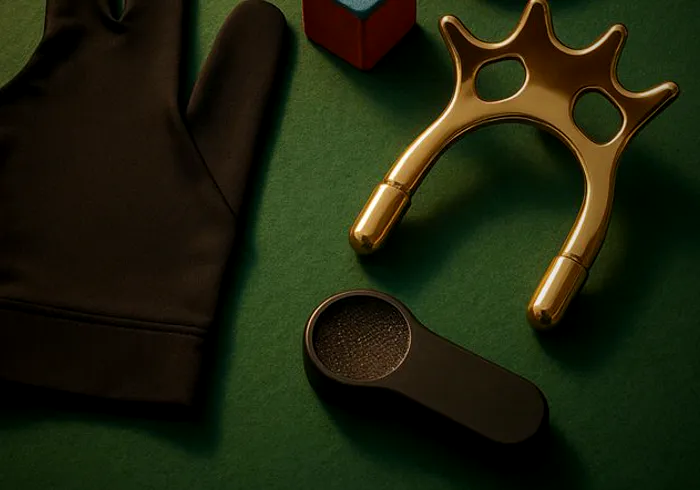
Bridge heads come in a few shapes, and what really matters is the notch pattern. A standard cross or X head gives you grooves at several heights, so the cue can sit low for a level shot or high to clear an obstructing ball. A spider or swan head has a tall arched neck that lifts the cue steeply. Reach for that one when you have to shoot over a ball parked close to the cue ball.
- Standard cross head: the everyday choice, multiple heights in one head.
- Spider head: a tall arch for steep elevation over a nearby blocker.
- Swan or extended neck: reaches farther across the table with a raised groove.
Head material and shaft
Molded plastic heads are the standard. They are cheap, they last, and they are slick enough that the cue glides. Brass and metal heads wear longer and slide even better, but they cost more and mostly turn up on higher-end tables. Material aside, stay away from rough or chipped heads. Any burr grabs your shaft and throws the stroke off.
The shaft wants to be light and reasonably stiff. A flimsy bridge stick flexes when you push it into position, and then the head will not hold still. A lot of players just use a spare cue with a screw-on bridge head, which gives them a rigid shaft that already feels familiar.
Technique that makes the bridge work
Lay the bridge flat on the cloth and pin it down with your off hand well back on the shaft so the head cannot creep. Set your cue in whichever groove gives you a level or slightly downward angle into the cue ball. Stroke short and controlled. Long power strokes are hard to keep straight off a bridge. Keep the tip low and hit near center ball, since sidespin gets much harder to control from a rake.
Our picks
Links open the current selection and price on Amazon so you can compare real reviews before buying.
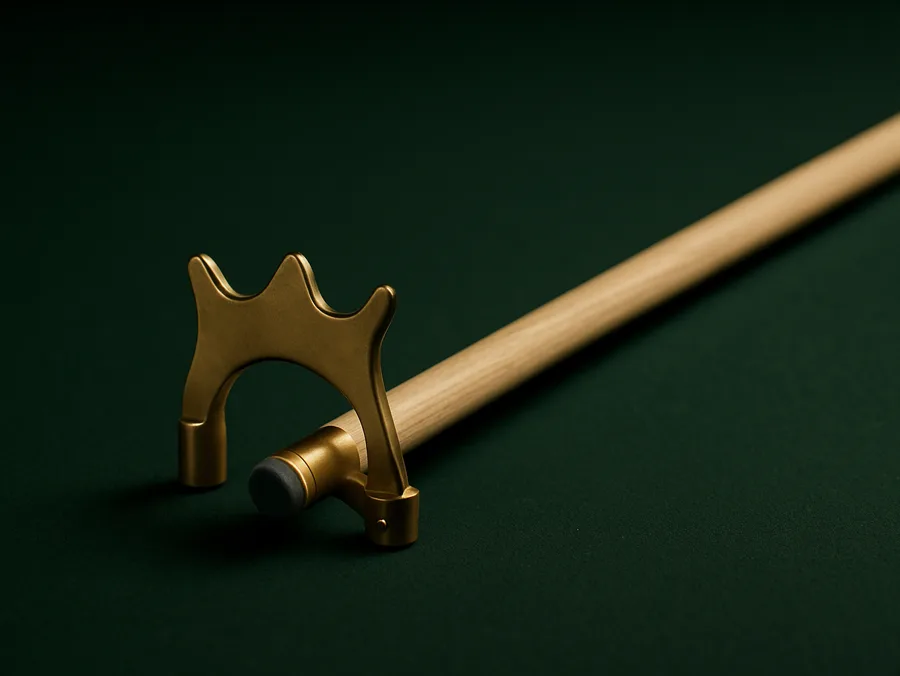
Molded Cross Bridge Head with Cue
The everyday all-purpose rakeA slick plastic cross head on a light shaft, with grooves at several heights for level shots and for clearing a blocking ball. The workhorse most players reach for.
Check price on AmazonSpider Bridge Head (screw-on)
Shooting steeply over a nearby ballA tall arched head that threads onto your own cue and lifts the tip high above the cloth, so you can clear a ball sitting right next to the cue ball.
Check price on Amazon
Brass Bridge Head
A smoother, longer-lasting slideA metal head that glides cleanly and resists chipping, so the stroke surface stays the same long after plastic would have worn down on a busy table.
Check price on AmazonFrequently asked questions
What is the difference between a bridge stick and a spider?
A standard bridge stick uses a cross head with grooves at a few modest heights, which covers general reach shots. A spider has a tall arched head that lifts the cue much higher. You need that when a ball sits close to the cue ball and you have to shoot steeply over it.
How do I keep the bridge from moving during my stroke?
Lay the head flat and press the shaft down against the cloth with your off hand placed well back. Use short controlled strokes instead of a big power stroke and the head will stay planted.
Can I use my regular cue as a bridge stick?
Yes. Many bridge heads screw onto the joint of a standard cue in place of the shaft, which leaves you a rigid, familiar shaft to work with. Keeping a spare cue just for this is a common and cheap setup.
Related guides
LeaguePool is reader-supported. When you buy through links on this site we may earn an affiliate commission at no extra cost to you. As an Amazon Associate we earn from qualifying purchases.