Best Pool Cue Racks
Leaning a good cue against the wall is how good cues go bad. Gravity and humidity slowly bow an unsupported shaft, and a stick that gets knocked over can chip a ferrule or snap a tip. A rack holds your cues straight, keeps them off the floor, and tidies the room while it is at it. Here is how to pick one.
Wall racks vs floor racks
First question is where the rack lives.
- Wall rack: saves floor space, keeps cues out of the way, and puts them on display. You need a decent wall and a way to mount it.
- Floor rack: stands anywhere and usually holds balls and accessories too. The cost is floor space near the table.
Wall racks suit smaller rooms. Renters who would rather not drill can get a freestanding design that leans against the wall instead of mounting. Floor racks, including tall pedestal and combination units, make sense when you have room to spare and want everything in one spot.
Capacity and layout
Count your cues, then add a few slots. Even if you own two sticks, guests need somewhere to put theirs, and most players pick up a break cue and a jump cue eventually. Capacities run from a simple two-cue holder up to racks carrying eight, ten, or twelve.
Think about what else the rack should hold. Plenty of floor and wall units include a shelf or cradle for the ball set, a cube for chalk, and a spot for the bridge and triangle. A combination rack keeps the gear together, which beats hunting for the chalk mid-game.
Protecting your cues
The whole point is protecting the cues, so look at how the rack holds them. Good designs support cues vertically, tip up or butt down, with the shaft held straight and no weight sitting on the tip. Clips or holes should grip the butt firmly enough that a bump does not send a cue crashing down.
Material is a looks-and-durability question. Solid wood racks feel and age best; metal and MDF cost less. Whatever you buy, keep cues away from heat vents and direct sun, because uneven drying warps shafts faster than anything else. Put the rack somewhere stable and moderate and your cues keep playing true for years.
Our picks
Links open the current selection and price on Amazon so you can compare real reviews before buying.
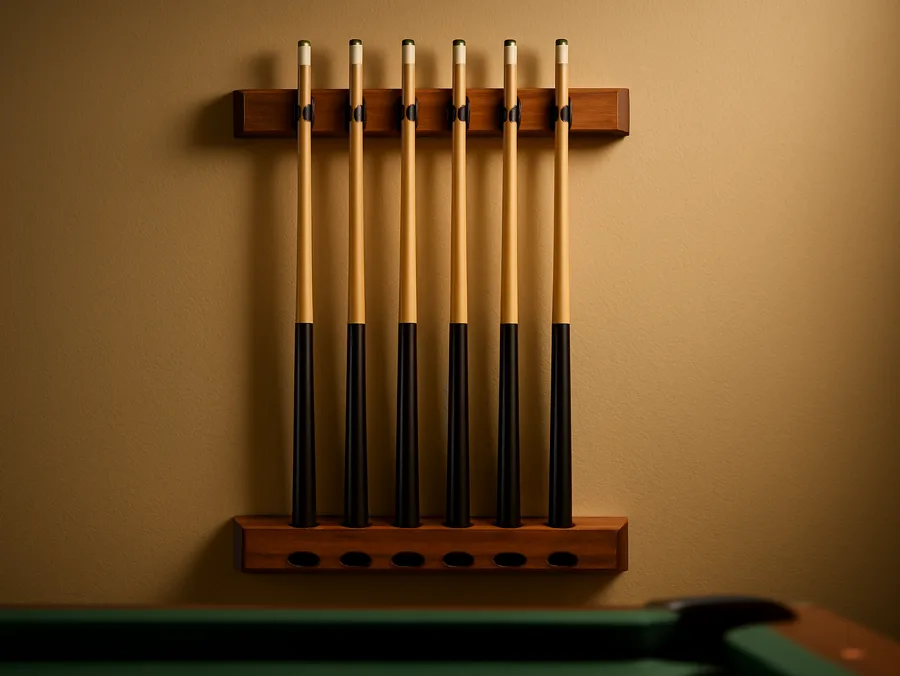
Wall-Mounted Wooden Cue Rack
Small rooms and displaySolid wood, holds several cues vertically and off the floor, with a shelf for the ball set and chalk so the gear stays together.
Check price on AmazonFloor-Standing Combination Rack
Holding all your gearA freestanding pedestal that carries cues, a full ball set, chalk, and a bridge in one tidy unit you can put anywhere.
Check price on AmazonTwo-Cue Wall Clip Holder
Minimal setupsA compact clip holder for one or two cues. Good for renters or tight walls where a full rack will not fit.
Check price on AmazonFrequently asked questions
Is it bad to lean a cue against the wall?
Yes, over time. An unsupported cue can bow, and it is easy to knock over, which is how ferrules and tips get chipped. A rack holds the shaft straight and keeps the cue off the floor.
Should cues be stored tip up or tip down?
Either works, as long as the shaft is supported straight and the tip is not carrying weight. Vertical is best. What you are after is a straight cue kept away from heat and humidity swings.
How many cue slots do I need?
Count your own cues and add a few for guests and for the break and jump cues you will probably buy later. A rack holding six to eight covers most home players.
Related guides
LeaguePool is reader-supported. When you buy through links on this site we may earn an affiliate commission at no extra cost to you. As an Amazon Associate we earn from qualifying purchases.