Best Pool Cue Wax and Shaft Sealers
A wood shaft that glides through your bridge like glass is not luck, it is maintenance. Cue wax seals the pores in the wood, slicks the surface, and blocks the hand moisture that slowly raises grain and turns a smooth shaft grabby. Ten minutes of waxing every month or two keeps a maple shaft feeling close to new.
Below: what wax actually does, carnauba versus the silicone shortcuts, the right way to apply and burnish it, and the one shaft type that should never see wax at all.
What waxing actually does
Maple is porous. Leave it bare and it drinks in hand sweat and oil, the grain swells and lifts, and the shaft starts dragging through your bridge. Wax does three jobs at once:
- Seals the pores so moisture and grime stay on the surface where a wipe takes them off.
- Slicks the slide with a hard, low-friction film that a quick burnish polishes to glass.
- Protects the finish on the butt and joint area from dings that pick up moisture.
It will not rescue a shaft already caked in years of grime. Clean it first with a shaft cleaner, then wax to keep it that way.
The difference is easy to feel. Run a bare, played-in shaft through your bridge on a humid night and it stutters. A freshly waxed and burnished one slides the same in July as it does in January. Consistency in the stroke starts with consistency in the equipment, and this is the cheapest consistency you can buy.
Carnauba vs. silicone products
Most dedicated cue waxes are carnauba based, the same hard plant wax that goes on car finishes. Carnauba buffs to a hard, dry film that never feels greasy and does not build up gummy layers. That is the feel you want under a bridge hand.
Silicone sprays and wipes slick a shaft fast, but a lot of players and cue makers stay away from them. Silicone can leave a surface that feels great for a day and then turns tacky, and it contaminates the wood if the shaft ever needs refinishing work. If you use a slicking product beyond wax, stick with ones made specifically for cues.
You will also see plain carnauba paste car wax recommended in forums, and in a pinch it does work, since dedicated cue waxes share the same base. The cue-specific products earn their price with easier application on a thin round shaft and no cleaner additives. Still, nobody should feel bad about a tin of pure carnauba doing double duty.
How to apply and burnish
- Wipe the shaft clean with a barely damp cloth, then dry it fully.
- Apply a thin layer of wax along the shaft. Thin is the whole trick, since a heavy coat just smears.
- Let it haze for a minute or two, per the product directions.
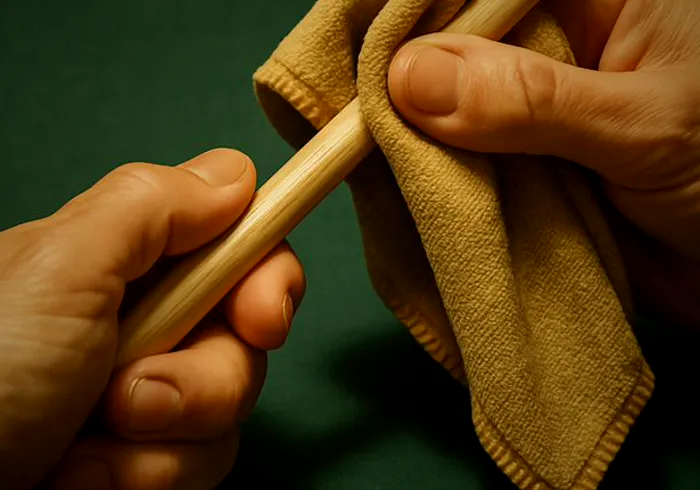
- Burnish briskly with a microfiber cloth or a leather burnishing pad, keeping the shaft moving so friction heat helps the wax bond and shine.
- Finish with a few fast strokes of the dry cloth until the shaft squeaks slick.
Once every month or two of regular play is plenty. In between, a dry microfiber wipe after each session does most of the maintenance work.
Wax vs. dedicated shaft slickers
Shaft slicker pads and papers, the little burnishing sleeves you run up and down the shaft, smooth the surface mechanically rather than chemically. They are good mid-session when humidity creeps in, and a leather-backed slicker doubles as your burnishing pad after waxing. But a slicker alone does not seal the wood. It polishes what is already there. The combination is the answer: wax at home for protection, slicker in the case for touch-ups.
If you only buy one, buy the wax. A sealed shaft resists the grime and moisture that create the need for mid-session touch-ups, so the slicker becomes a nice-to-have instead of a crutch. Players who fight a sticky shaft every session almost always have an unsealed, unwashed shaft, not a missing gadget.
Do not wax carbon fiber
Carbon fiber shafts like the Revo, Cuetec Cynergy, or Defy have a non-porous composite surface. There is nothing to seal, and wax just builds a film the manufacturer never intended, which sometimes makes the surface feel worse. Every major maker says the same thing: wipe carbon shafts with a slightly damp microfiber cloth, dry them, done. Save the wax for wood.
Our picks
Links open the current selection and price on Amazon so you can compare real reviews before buying.
Q Wax cue shaft wax
Straightforward carnauba waxA dedicated carnauba cue wax that goes on thin and burnishes to a hard, dry slickness with no gummy buildup.
Check price on AmazonMcMagic shaft cleaner and sealer
Clean and seal in one systemCleans embedded grime first, then seals the pores, which is the right order when your shaft has gone gray and sticky.
Check price on AmazonTiger shaft slicker burnishing pad
In-case touch-upsA leather-and-fabric slicker sleeve that burnishes the shaft glassy mid-session and doubles as your waxing burnisher.
Check price on AmazonMicrofiber cue towel set
Every-session maintenanceThe unglamorous workhorse. A dry microfiber wipe after each session keeps grime from ever bonding to the wax layer.
Check price on AmazonFrequently asked questions
How often should I wax a pool cue shaft?
Every one to two months with regular play, or whenever the shaft starts feeling draggy despite a wipe-down. More often does no harm as long as each coat goes on thin and gets fully burnished.
Can I use car wax or furniture polish on my cue?
Plain carnauba paste car wax works in a pinch, since dedicated cue waxes are largely the same base. Avoid furniture polish and anything with silicone or cleaners in it, which can leave a tacky film and contaminate the wood.
Should I wax a carbon fiber shaft?
No. Carbon fiber is non-porous, so wax only adds a film the surface was never designed for. Manufacturers recommend wiping with a slightly damp microfiber cloth and drying it, nothing more.
Related guides
LeaguePool is reader-supported. When you buy through links on this site we may earn an affiliate commission at no extra cost to you. As an Amazon Associate we earn from qualifying purchases.