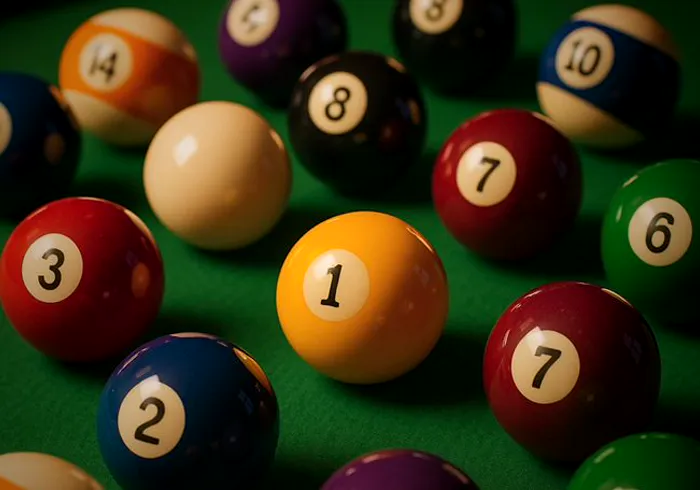
What Were Billiard Balls Originally Made Of?
Rack a set of modern billiard balls and you are holding the end of a strange 400-year materials story that runs through European forests, African ivory markets, an exploding-plastic legend, and finally a Belgian chemistry lab. Few pieces of sporting equipment have been remade this many times.
Knowing the history is not just trivia. It explains why old ball sets behave badly, why Aramith dominates today, and why that yellowed set in your grandfather's basement might be worth keeping on a shelf instead of a table.
Wood and clay: the crude beginnings
Billiards grew out of lawn games in the 1400s and 1500s, and the first indoor balls were simply turned from hardwood. Wood was cheap and easy to shape, but it wore unevenly, absorbed moisture, and drifted out of round, so no two balls rolled quite alike. Clay balls, fired and polished, came later and stuck around a surprisingly long time as the budget option; well into the twentieth century, cheap sets were still called mud balls by players. Neither material could deliver what the game increasingly demanded: identical weight, true roundness, and lively, predictable rebound.
The ivory era and its problems
By the 1600s ivory was the premium choice, and for two centuries a proper billiard ball meant elephant ivory. It could be turned beautifully and had a feel players loved. The problems were serious, though. Only a few balls could be cut from the heart of a tusk, and estimates from the era suggest an average tusk yielded perhaps three good balls, which made the trade brutally wasteful and helped drive elephant populations down. Ivory also behaved like the organic material it was: balls had to be seasoned for months, they yellowed, they warped with temperature and humidity, and they cracked in cold rooms. Matching a set for weight and balance was a craftsman's headache, and a prized ball could split mid-game.
The 10,000 dollar prize and the plastic revolution
Around 1869, with ivory expensive and supply shaky, the American firm Phelan and Collender advertised a 10,000 dollar prize for a satisfactory substitute. An inventor named John Wesley Hyatt answered with balls based on celluloid, one of the first commercial plastics. The famous story says celluloid balls occasionally exploded on hard contact; that is mostly legend. Celluloid is genuinely flammable, and Hyatt himself recounted that saloon owners reported a loud crack like a percussion cap now and then, but balls were not detonating on break shots. The real problem was that celluloid was not durable or stable enough. Hyatt likely never collected the prize, but his work helped launch the plastics industry, which matters more than billiards ever did.
Bakelite to Aramith: the modern ball
The breakthrough came with thermoset resins. Bakelite, patented in the early 1900s, gave makers a hard, stable, castable material, and billiard balls moved to it and to related plastics through the mid-century. The refinement of that chemistry is phenolic resin, and since the mid twentieth century the Belgian company Saluc has cast it under the Aramith name into what are effectively the world standard balls. Modern phenolic balls are better than ivory ever was in every measurable way:
- Uniform density and weight across the whole set, so every ball rolls the same.
- Roundness held to tight tolerances that ivory could never maintain.
- Hardness and burn resistance, so friction marks from cloth do not scar the surface.
- Lifespan measured in decades; a quality set outlives several cloth changes.
Cheaper sets today use polyester or acrylic instead, which is why they scratch, yellow, and go dull years before a phenolic set shows wear.
What to do with old balls
If you inherit an old set, identify it before you play with it. Genuine ivory balls show fine crosshatched grain lines and are collectible; they belong in a display case, not on a table, and selling ivory is legally restricted in many places, so research before listing anything. Old clay and early plastic sets have modest collector interest but make charming shelf pieces. If the set is just a worn polyester set from the 1990s, clean it up for the kids' table and buy phenolic for real play.
Our picks
Links open the current selection and price on Amazon so you can compare real reviews before buying.
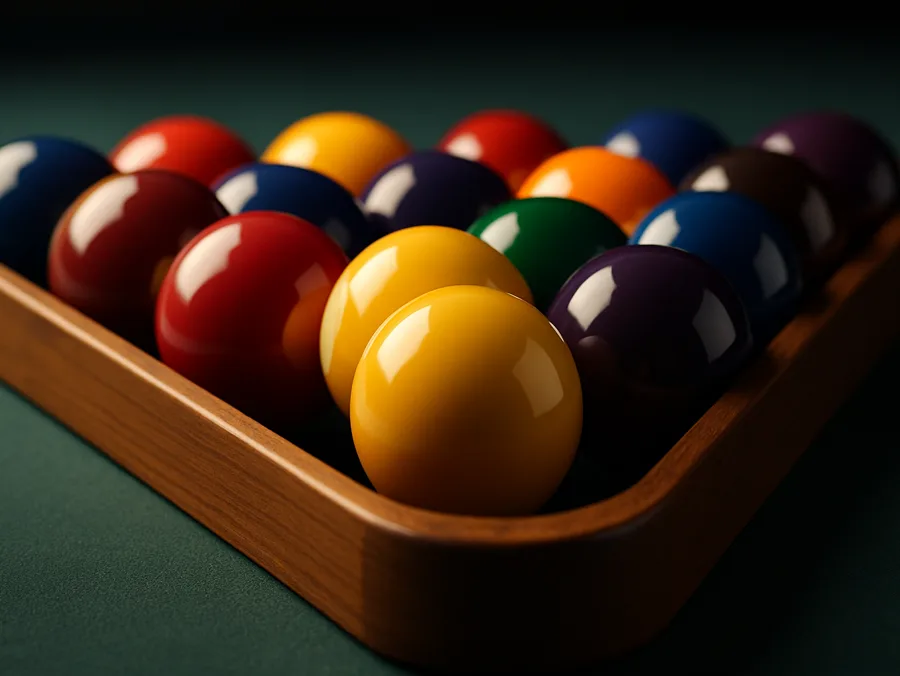
Aramith Premier ball set
The modern standardCast phenolic resin from the company that ended the materials arms race. A mid-range Aramith set plays true for decades and is the sensible endpoint of this whole history.
Check price on Amazon
Aramith billiard ball cleaner
Restoring shine and rollA dedicated cleaner lifts chalk and cloth burn residue that dulls balls over time, and it is safe on phenolic surfaces where household abrasives are not.
Check price on AmazonWooden billiard ball display rack
Showing off old setsIf you own an ivory, clay, or vintage plastic set, a wall-mounted display rack keeps it out of play and turns it into the best conversation piece in the room.
Check price on AmazonFrequently asked questions
Were billiard balls really made of ivory?
Yes. From roughly the 1600s to the late 1800s the best billiard balls were turned from elephant ivory, with only a few good balls coming from each tusk. Scarcity, cost, and the material's tendency to warp and crack drove the search for substitutes.
Did celluloid billiard balls actually explode?
Not in the dramatic way the legend suggests. Celluloid is flammable, and period accounts mention an occasional loud crack on violent contact, but balls were not blowing up during normal play. The material was abandoned mainly because it was unstable and wore poorly.
What are billiard balls made of today?
Quality balls are cast phenolic resin, with Aramith by Saluc as the dominant maker used on professional tours. Budget sets are usually polyester or acrylic, which cost less but scratch and lose their polish much faster.
Related guides
LeaguePool is reader-supported. When you buy through links on this site we may earn an affiliate commission at no extra cost to you. As an Amazon Associate we earn from qualifying purchases.