How Much Does a Pool Cue Cost?
Pool cues span three orders of magnitude. You can buy one for twenty dollars and you can buy one for twenty thousand, and both transactions happen regularly. That range makes the simple question hard to answer, because the honest reply is that it depends entirely on what you want the cue to do.
What follows is a practical breakdown: what each price bracket actually contains, at what point spending stops improving how the cue plays, and the costs people forget about when they budget for a cue.
The price brackets
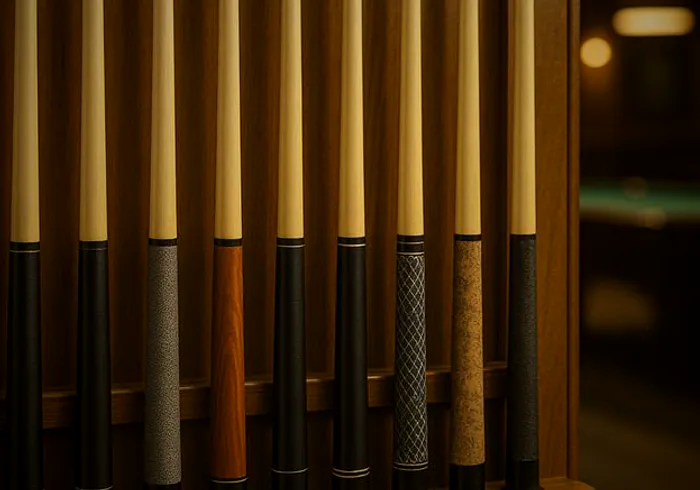
Under $60 - game room props. Cues sold in multipacks to fill a wall rack. Basic tips, uncertain shaft wood, no warranty. They pot balls and they are entirely adequate for guests at a house party. They are not cues to learn on.
$80 to $150 - a real first cue. Billiards-brand cues with maple shafts, metal joints, proper weight options and a warranty against warping. Players, Valhalla and McDermott Lucky live here. This is enough cue for league play and many people never need more.
$150 to $300 - the sweet spot. Better wraps, better joints, more consistent shafts, and toward the top of this range some cues include a low-deflection shaft. If you already know you are committed, buying here once is cheaper than buying at $100 now and $300 later.
$300 to $600 - American-built entry cues. Domestic production from McDermott, Viking, Joss and similar. Better construction consistency, factory repair service and much stronger resale value. Performance gain over the previous tier is small.
$600 to $2,000 - craft. Serious inlay work, exotic woods, refined finishes. Beautiful cues that play the same as the tier below.
$2,000 and up - custom builds from individual makers, often with long waiting lists.
Where performance actually stops improving
Around $300, and the reason is structural. Three components affect how a cue plays: the shaft, the tip and the joint. All three are fully sorted well below $400.
Everything above that is butt decoration, wood selection for appearance, and finish quality. Those are legitimate things to want and legitimate reasons to spend money, but nobody has ever missed a shot because their butt sleeve lacked veneer points.
The exception, and it is an important one, is shaft technology. A low-deflection or carbon shaft genuinely changes where the cue ball goes on shots with side spin. If you want to spend money on performance, that is where it goes, and it can be added to a butt you already own.
Which leads to the most useful budgeting advice in this whole guide: a $150 butt with a $300 low-deflection shaft outperforms a $450 complete cue with a standard maple shaft, for any player who uses english.
The costs people forget
- A case: $40 to $150. Not optional. Cues warp from bad storage, not from play, and a warped cue is worthless regardless of what it cost.
- A better tip: $20 to $50 installed. Almost every cue under $200 ships with a tip worth replacing.
- A break cue: $60 to $150. Break impacts are what mushroom tips and crack ferrules. A cheap breaker pays for itself in avoided repairs within a year of weekly play.
- Retips: $20 to $50, once or twice a year for a regular player.
- Chalk, gloves, a scuffer: $20 to $60 in small purchases that add up.
- Shaft upgrade later: $200 to $600, which many players end up making.
Realistic all-in for a committed new league player: about $250 to $400 covering a good cue, a case, a better tip and a break cue. That is the number to budget, not the cue price alone.
What drives price in a cue
Understanding this makes shopping much easier.
Labor is the biggest driver at the top. Cut inlay work is slow, skilled handwork, and a cue with a hundred inlays represents days of it.
Materials. Exotic woods, ivory alternatives, and premium metals cost more than maple and stainless steel.
Shaft technology. Low-deflection construction and carbon fiber both cost real money to produce.
Country of manufacture. Domestic build costs more than imported. This buys consistency and repairability rather than accuracy.
Brand and scarcity. A well-known maker with a waiting list charges accordingly, and collectible cues are priced by rarity rather than by function.
Only the third item on that list affects how the cue plays. That is not a criticism of the others, it is just useful to know what you are buying.
How much should you actually spend?
Never played, curious: nothing. Use house cues for a few months. If the interest sticks, then buy.
New but committed: $100 to $150 on a billiards-brand cue, plus a case. Play a season and learn what weight and wrap you like.
League player, weekly: $200 to $300 on the cue, a good tip, a case and a break cue.
Serious amateur using spin: keep your butt, spend $300 to $500 on a low-deflection or carbon shaft. Best performance per dollar available.
Buying a cue for life: $400 to $800 on an American-built cue, or less buying used from the same makers. Used is genuinely the smart move here, since these cues depreciate early and then hold value indefinitely.
Buying a gift: $100 to $200 for a good cue, or spend less on the cue and more on a proper case, which the recipient will appreciate more than they expect.
Our picks
Links open the current selection and price on Amazon so you can compare real reviews before buying.
Billiards-brand entry cue
A first owned cueMaple shaft, metal joint, real weight options and a warranty against warping, for $80 to $150. Enough cue for league play.
Check price on AmazonMid-range cue with low-deflection shaft
Buying onceAround $250 to $350, cues start including low-deflection shafts. The tier where committed players tend to settle for good.
Check price on Amazon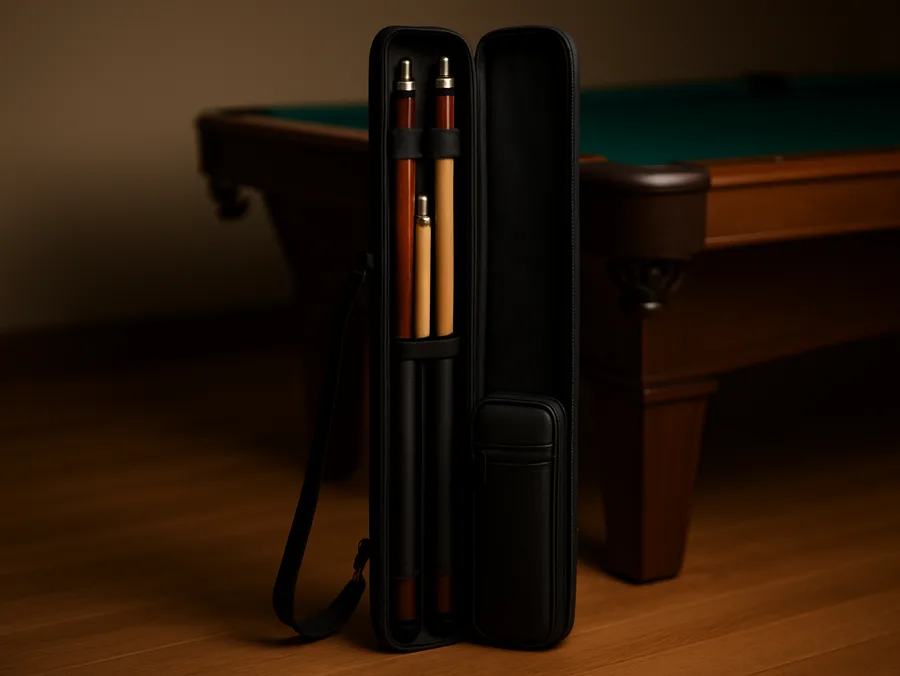
2x2 hard cue case
Protecting the purchaseCues warp from storage, not from play. A case is not an accessory, it is what keeps the cue you bought worth owning.
Check price on Amazon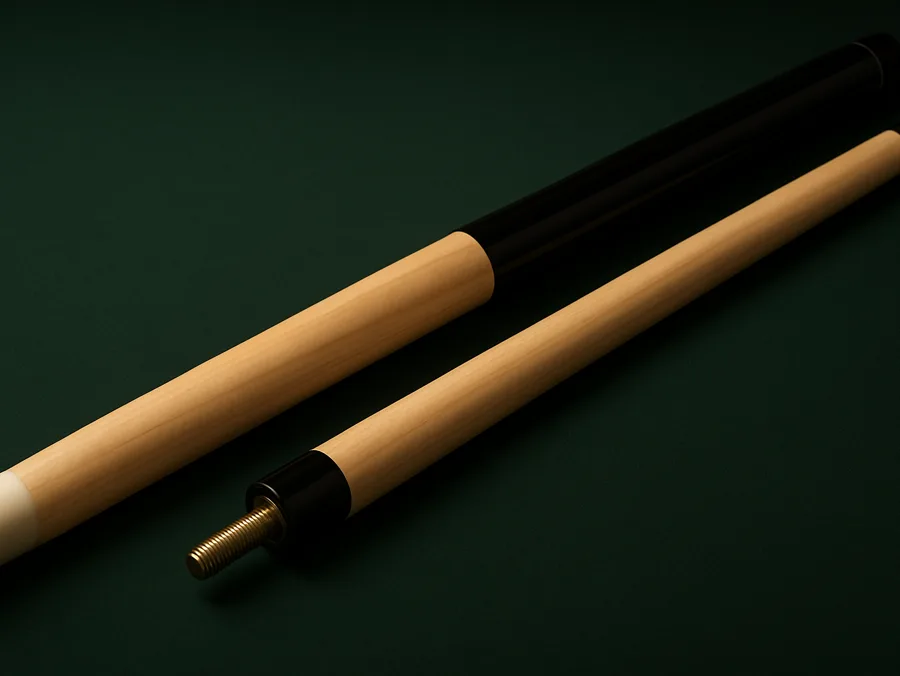
Budget break cue
Avoiding repair billsAround $70 and it keeps break impacts off your playing tip and ferrule. Pays for itself in avoided retips within a year.
Check price on AmazonFrequently asked questions
How much should I spend on a pool cue?
For a first owned cue, $80 to $150 from a billiards brand. For a cue you expect to keep, $200 to $300. Above roughly $400 the money goes into craftsmanship and materials rather than performance.
Is an expensive pool cue better?
Better made, yes. Better playing, only up to a point. Shaft, tip and joint quality are all sorted below $400, and everything above that is decoration, materials and resale value rather than accuracy.
What is the total cost of getting set up to play?
Budget $250 to $400 for a committed new league player. That covers a good cue, a case, a quality tip installed, and an inexpensive break cue to keep break impacts off your playing tip.
Is it better to buy a better cue or a better shaft?
The shaft, in almost every case. A low-deflection or carbon shaft fitted to a butt you already own changes where the cue ball goes on shots with side spin, which is the only equipment change that reliably affects results.
Related guides
LeaguePool is reader-supported. When you buy through links on this site we may earn an affiliate commission at no extra cost to you. As an Amazon Associate we earn from qualifying purchases.