How to Choose a Pool Cue
Cue shopping feels overwhelming until you notice it comes down to a handful of decisions: weight, tip, shaft, wrap, joint, and budget. Work through them one at a time and you end up with a cue that fits your game and your hands. Here is how each one shakes out.
Weight and balance
Cue weight runs 18 to 21 ounces, and 19 is the most common all-around pick. A lighter cue swings faster and suits finesse players with quick strokes. A heavier one brings more mass to a controlled hit. Balance point counts too. Most cues balance 18 to 19 inches from the butt for a neutral feel, and a more forward balance feels heavier in the hitting hand. Not sure? Start at 19 ounces and adjust once you know what you like.
- Lighter (18-18.5 oz): Faster swing, finesse players.
- Heavier (20-21 oz): More mass, controlled power.
Tip and shaft
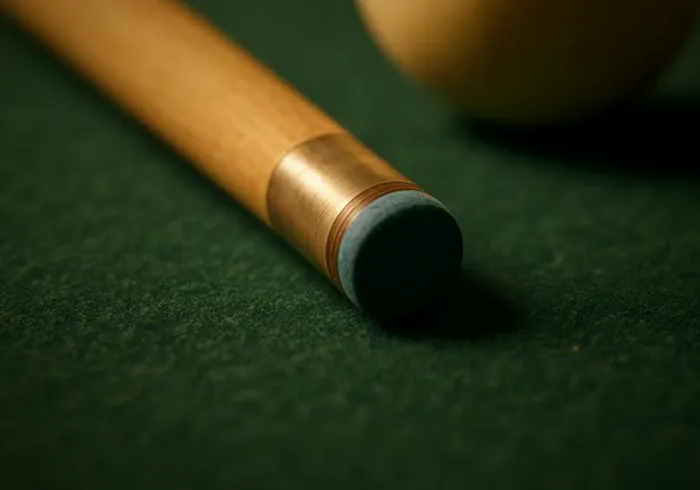
The tip is where the cue meets the ball, so start there. A medium-hardness leather tip, ideally layered, holds chalk and shape well and suits nearly everyone. A tip diameter of 12.5mm to 13mm is the forgiving standard. For the shaft, hard-rock maple is the traditional choice. Low-deflection maple or carbon-fiber shafts cut squirt on spin shots, worth paying for if you play position with english. And whatever you buy, make sure the shaft is straight.
- Tip: Medium leather, layered, 12.5 to 13mm.
- Shaft: Straight maple; consider low-deflection if you spin often.
Wrap and joint
The wrap is about grip and comfort. Irish linen stays cool and grippy. Leather handles sweat well in warm rooms. A smooth wrapless finish suits dry hands or glove users. The joint shapes the hit: stainless steel or phenolic gives a firm, solid feel, wood-to-wood gives softer feedback. Neither one is better. Pick the feel you like, and check that the two halves screw together snugly with no gap.
- Wrap: Linen, leather, or smooth, based on grip and sweat.
- Joint: Metal for firm hit, wood-to-wood for feedback.
Budget and buying smart
The biggest jump in quality comes when you move from a bargain cue into the $100 to $200 range, where the wood, tips, and machining all improve. Past roughly $200 you are mostly paying for looks, brand, and marginal feel. So set a budget, then spend it on a straight shaft and a quality tip instead of inlays. And whatever you buy, add a cheap break cue. Your playing cue should never take the abuse of the break.
- Sweet spot: $100-$200 for the best value.
- Protect it: Break with a separate break cue, not your gamer.
Our picks
Links open the current selection and price on Amazon so you can compare real reviews before buying.
Two-piece maple cue, 19 oz, 13mm layered tip
Best starterA straight maple cue at 19 ounces with a quality layered tip covers the fundamentals and fits most players right out of the box.
Check price on AmazonCue with low-deflection shaft
Spin and position playersIf you use english for shape, a low-deflection shaft makes those shots more predictable, and the upgrade is a modest one.
Check price on AmazonPlaying cue and break cue package
Complete setupA package with a playing cue and a dedicated break cue means you never abuse your good tip on the break.
Check price on AmazonFrequently asked questions
What is the best all-around cue weight?
19 ounces. It sits in the middle of the common range and works for both breaking and shooting until you develop a personal preference.
How much should I spend on my first cue?
$100 to $200 gets you the biggest jump in quality. Below that you risk warp and poor tips; above it you mostly pay for looks and brand.
Do I need a low-deflection shaft?
Only if you regularly use side spin for position. Center-ball players and beginners do fine with a good standard maple shaft.
Related guides
LeaguePool is reader-supported. When you buy through links on this site we may earn an affiliate commission at no extra cost to you. As an Amazon Associate we earn from qualifying purchases.