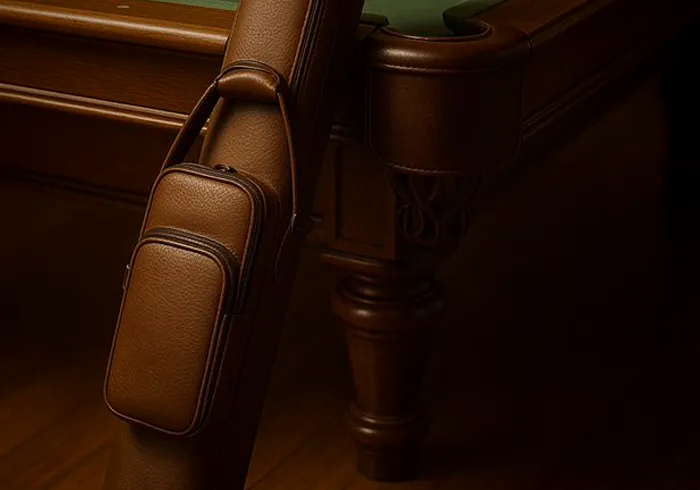
Hard vs Soft Pool Cue Cases
Hard and soft cases both protect a cue, just from different things. Crush protection costs you weight, bulk, and money, so the right case comes down to how far you travel and where you end up playing.
What each type protects against
- Hard cases: A rigid shell (plastic, tube, or reinforced) takes crushing and drops. This is what you want when a cue might get stacked under luggage or knocked over.
- Soft cases: Padded fabric keeps scratches and small dings off the cue, but it flexes under any real pressure. Fine for short, careful trips.
Scratches are not really the question. Crush and impact are, and that is where a hard case earns its price.
Weight, bulk, and comfort
Protection costs you convenience.
- Soft cases are light and slim, easy to sling over a shoulder or leave in the car. Fine for walking into your weekly room.
- Hard cases are heavier and bulkier. Tube styles protect well but carry awkwardly, and box styles handle better while taking up more space.
If you carry a cue on foot much, weight matters more than you would guess.
Price and value
Soft cases cost less, which makes one an easy first case. Hard cases cost more, but the difference is small next to what a decent cue and shaft run. Think of it as insurance and match the case to what is inside it. A high-end cue deserves a hard case. A basic house-style cue is fine in a soft one.
How to choose
- Local, careful use: Soft case.
- Frequent travel, flights, rough handling: Hard case.
- Expensive cue or multiple shafts: Hard case, and stop thinking about it.
- Want some of both: A semi-hard case, rigid inside and padded outside, splits the difference.
Our picks
Links open the current selection and price on Amazon so you can compare real reviews before buying.
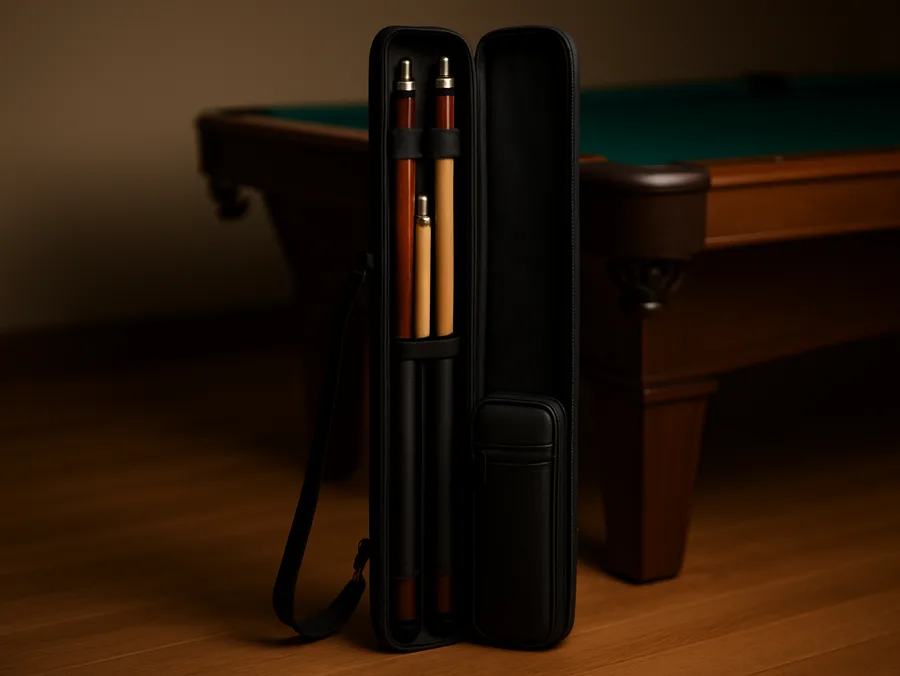
Hard shell 2x2 cue case
Maximum protectionA rigid shell takes drops and crushing without passing them along to the cue, which is what travel or a valuable cue calls for.
Check price on AmazonPadded soft cue case
Light local useSlim and light for the walk into your weekly room, with enough padding to keep scratches and small bumps off the cue.
Check price on Amazon
Semi-hard cue case
Balance of bothA rigid interior under a lighter padded exterior gets you most of the protection without full hard-case bulk.
Check price on AmazonFrequently asked questions
Is a hard case necessary?
Not for everyone. A cue that only goes short distances and gets handled carefully is fine in a padded soft case. A hard case pays off once you fly, check the case, or own a cue expensive enough to want the extra protection.
Will a soft case protect against warping?
Neither type stops warping by itself. Warping comes from heat, humidity, and leaving a cue leaning for long stretches. Whichever case you own, store it flat or hang the cue vertically somewhere dry and stable.
Can a hard case get checked on a flight?
A sturdy hard tube or box case is much safer in checked baggage than a soft one, though plenty of players carry the cue on when the airline allows it. Pad out any empty space inside so nothing shifts around.
Related guides
LeaguePool is reader-supported. When you buy through links on this site we may earn an affiliate commission at no extra cost to you. As an Amazon Associate we earn from qualifying purchases.