
How to Hold a Pool Cue: Grip and Bridge
How you hold the cue decides almost everything that happens after. A tense grip steers the ball offline, and a shaky bridge lets the tip wander at the worst moment. Get the grip and the bridge right and the rest of your game gets easier.
Grip pressure: lighter than you think
The single most common mistake among newer players is squeezing the cue. A death grip tightens your forearm, kills the natural swing, and pushes the tip offline right at contact. Hold the cue as if you were carrying a small bird: firmly enough that it will not drop, loose enough that you would never hurt it.
Your grip hand should cradle the cue mostly in the fingers, not jammed into the palm. Many strong players let the thumb and last two fingers stay soft and do the real gripping with the middle and index fingers. The wrist stays loose so the cue can accelerate freely through the ball.
Where the grip hand belongs
Position matters as much as pressure. When your tip is at the cue ball, ready to strike, your grip forearm should hang straight down, perpendicular to the floor, with the elbow directly above the hand. This puts the pendulum swing at its natural low point exactly where contact happens.
If your grip is too far forward or back on the butt, you lose that alignment. As a starting point, hold the cue a few inches behind its balance point. Taller players and longer bridges may slide the hand back a little. Let comfort and a level cue guide the exact spot.
The open bridge
The open bridge is the easiest to learn and works for the large majority of shots. Lay your hand flat on the cloth, spread the fingers for a wide base, then draw your thumb up against the side of your forefinger to form a V-shaped groove. Rest the cue in that groove. Raise or lower the heel of your hand to change the tip height on the cue ball.
Its big advantage is a clear line of sight down the cue and no friction fighting the shaft. Keep the bridge hand planted and still: a bridge that slides during the stroke ruins accuracy.
The closed bridge
For power shots, draw, and heavy english, a closed bridge gives more control because the shaft cannot jump out of the groove. Make an open bridge first, then loop your forefinger up and over the shaft so it forms a ring, with the tip of that finger resting against your thumb or middle finger. The cue slides back and forth through the loop.
Keep the loop snug but not gripping. Beginners often clamp the loop and add unwanted friction. Practice both bridges so you can pick the right one for each shot, and learn a raised or rail bridge for balls frozen to a cushion.
Our picks
Links open the current selection and price on Amazon so you can compare real reviews before buying.

Billiard glove
Smoother, more consistent bridgeA glove on the bridge hand lets the shaft slide the same way every stroke, even when your hands get warm or humid. It removes the sticky spots that make an open bridge grab unpredictably.
Check price on Amazon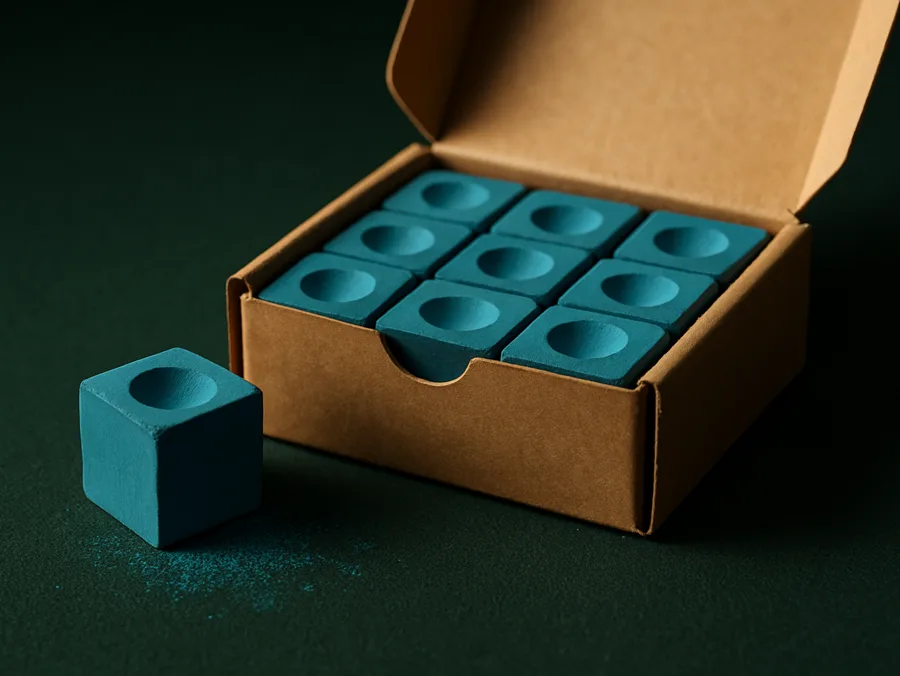
Cue tip chalk (quality brand)
Reliable contact so grip and bridge can do their jobGood chalk keeps the tip biting the ball, which matters most on the spin and power shots where your closed bridge earns its keep. Cheap chalk skids and undoes clean technique.
Check price on AmazonTwo-piece maple house-grade cue
Learning grip and bridge with a straight, consistent shaftA straight, well-balanced starter cue makes it far easier to feel a level stroke and a repeatable grip than a warped bar cue. Look for a hard leather tip and a balance point that suits your hand position.
Check price on AmazonFrequently asked questions
Should I use an open or closed bridge?
Use an open bridge for most shots because it gives the clearest sight line and the least friction. Switch to a closed bridge for power shots, draw, and strong english, where the loop keeps the shaft from jumping out of the groove.
How tight should I grip the cue?
As lightly as you can while still keeping control of the cue. Think of cradling it in your fingers rather than squeezing it in your palm. A loose grip lets the cue swing freely and keeps the tip online through contact.
Where should my grip hand be on the cue?
Hold the butt so that when the tip reaches the cue ball your forearm hangs straight down, elbow above hand. That is usually a few inches behind the cue's balance point, adjusted for your height and bridge length.
Related guides
LeaguePool is reader-supported. When you buy through links on this site we may earn an affiliate commission at no extra cost to you. As an Amazon Associate we earn from qualifying purchases.