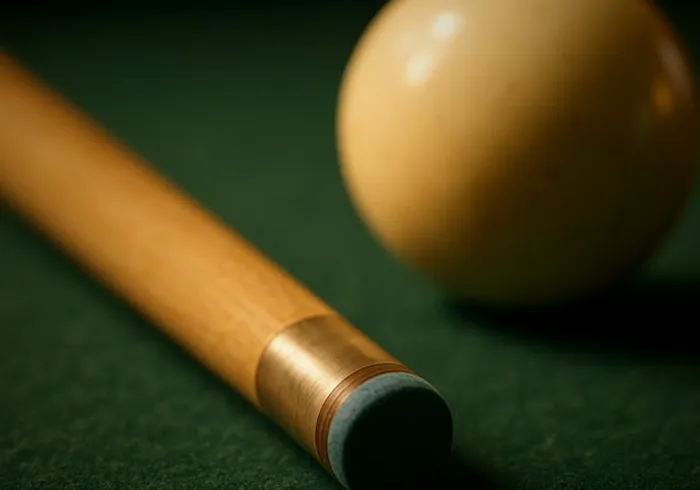
How to Follow the Cue Ball
Follow is the natural partner of draw. Where draw pulls the cue ball back, follow drives it forward after contact. It is often the easiest way to move the cue ball down the table for position, and because top spin is the ball's natural rolling state, follow is one of the most dependable shots in the game.
Why follow is the easy spin
Every cue ball wants to roll. Over any distance a center-ball hit picks up natural top spin on its own, so follow simply adds that spin sooner and stronger. Strike above center and the ball leaves the tip already rolling forward, which means at contact it does not stop, it continues through and forward.
Because you are working with the ball's natural tendency rather than against it, follow is more forgiving than draw and a great place for improving players to build spin confidence.
How to hit a follow shot
Aim your tip about a tip to a tip-and-a-half above center. Keep the cue level so you strike cleanly on the upper half of the ball rather than gouging down over the top. A stable bridge, open or closed, works fine; some players raise the bridge slightly to reach above center comfortably.
Chalk up, keep the grip relaxed, and follow through smoothly. As with draw, cutting the stroke short reduces the spin. Let the tip finish past the ball's original position.
Using follow for position
Follow shines when your next ball is farther down the table than the one you are shooting. After a follow shot, the cue ball continues along the line it took off the object ball, so plan that path before you shoot. On a straight-in shot, follow drives the cue ball forward through where the object ball was.
Combine follow with the angle of your cut to steer the cue ball around the table. A little follow on a cut shot widens the forward roll; more follow sends it farther. Thinking one shot ahead is what turns follow from a trick into a strategy.
Common mistakes
The main errors are hitting too high and miscuing, elevating the cue and jumping the ball, and confusing a plain roll with true follow. On short shots a center hit may not develop much roll before contact, so an intentional high hit gives you reliable, immediate follow.
Also watch your speed. Too much pace with heavy follow can send the cue ball much farther than intended, sometimes into a scratch. Practice controlling how far forward the cue ball travels, not just whether it follows.
Our picks
Links open the current selection and price on Amazon so you can compare real reviews before buying.

Training cue ball with target markings
Dialing in a consistent high hitA marked cue ball confirms you are striking above center by the same amount each time, so your follow distance becomes predictable rather than random.
Check price on AmazonQuality cue tip and chalk
Clean contact above center without miscuesA well-shaped tip and grippy chalk keep the cue biting the upper half of the ball so your top spin transfers cleanly on every follow shot.
Check price on AmazonWell-balanced playing cue
Smooth follow-through for position playA straight, balanced cue makes the smooth accelerating stroke that follow rewards feel natural, helping you control how far the cue ball rolls forward.
Check price on AmazonFrequently asked questions
What is the difference between follow and a natural roll?
A natural roll is the top spin a center-ball hit develops on its own over distance. Follow is deliberate top spin from a high hit, so the cue ball rolls forward immediately and strongly, which is more reliable on short shots where natural roll has not developed yet.
How high should I hit for follow?
Start about a tip to a tip-and-a-half above center with a level cue. Hitting much higher increases miscue risk for little extra benefit. Keep the cue level so you strike the upper half of the ball cleanly rather than driving down over the top.
When should I use follow instead of draw?
Use follow when your next ball is farther down the table along the path the cue ball will take after contact. Follow drives the cue ball forward, so it is the natural choice for moving up-table, while draw is for pulling back toward you.
Related guides
LeaguePool is reader-supported. When you buy through links on this site we may earn an affiliate commission at no extra cost to you. As an Amazon Associate we earn from qualifying purchases.